Tequila Train Vs Regular Tour In Guadalajara
Is the Jose Cuervo Express worth it? Compare price, experience, and flexibility vs regular tours to decide if this iconic tequila train fits your trip.
Last updated: April 14, 2026
Booking choice: Pair the agave landscape and Mundo Cuervo experience with a cultural show and the railway return to Guadalajara. Check Jose Cuervo Express Dates
Tequila Train Vs. Regular Tour: Side-by-Side
| Days available | Saturdays only | Any day of the week |
| Cost per person | MX$3,250-5,775 (~USD $160-290) Verified April 2026 | USD $60-200+ depending on format |
| Distilleries visited | La Rojeña (Jose Cuervo) only | 1-3 distilleries, any producer |
| Craft distillery access | No | Yes (Fortaleza, Cascahuín, El Tequileño, etc.) |
| Train ride through agave fields | Yes, scenic, 2 hours each way | No (van/vehicle) |
| Live entertainment | Mariachi, folkloric ballet show | Not included |
| Open bar | Yes (cocktails, all wagon classes) | Structured tastings at each stop |
| Itinerary flexibility | Fixed, no customization | High (private) or moderate (group) |
| Tequila education depth | Moderate (one brand, structured tastings) | High (multiple producers, bilingual guide) |
| Lunch included | Not in most wagons (free time in town) | Varies by operator |
| Best for | Special occasions, atmosphere, first-timers | Education, flexibility, craft producers |
All prices verified April 2026. Train pricing sourced from official Mundo Cuervo 2025 brochure.
What Is The Tequila Train And How Is It Different From A Regular Tour?
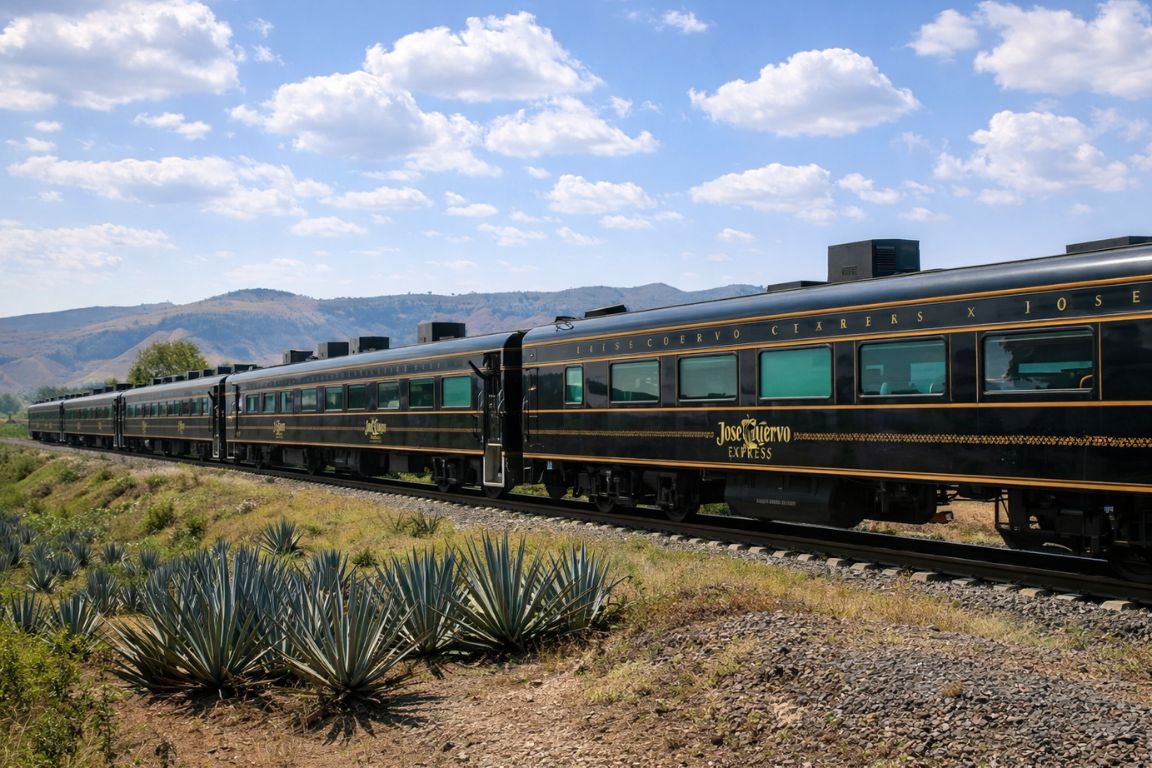 The Jose Cuervo Express is a vintage-style passenger train that runs Saturdays between Guadalajara and Tequila town, operated by Jose Cuervo as a branded experience. It covers La Rojeña distillery, the agave fields, a folkloric show, and a structured tasting, all in an 11-hour day. A regular guided tour uses a private vehicle, visits multiple distilleries including craft producers the train never reaches, and gives a bilingual guide for the full day. The train is an event. A regular tour is an education.
People sometimes arrive at this comparison assuming the train is just fancier transport to the same experience. It isn’t. The train is its own format with its own logic, its own strengths, and its own limitations. Understanding both before you book prevents the kind of disappointment that comes from expecting one and getting the other.
The Jose Cuervo Express was designed as a branded day trip: a full sensory package built around the Cuervo aesthetic. Vintage wooden coaches, cocktails poured by train staff, mariachi music, blue agave rolling past the windows. It’s cinematic. Traveling through the Jalisco countryside in that context feels genuinely different from a van window, and people who expected a gimmick are consistently surprised by how much they enjoy it.
A regular guided tour, whether group or private, is built around distillery access and tequila knowledge. The vehicle is a means to an end. What you’re buying is a bilingual guide who knows production, relationships with distillery operators that get you into places the train never visits, and the flexibility to build a day around your specific interests rather than a fixed branded itinerary.
Both formats have serious fans. The question is which one matches what you actually came to Jalisco for.
Not sure how to get there without a car? Check out our how to visit Tequila distillery from Guadalajara guide before you book anything.
What Does The Jose Cuervo Express Actually Include And How Does The Day Run?
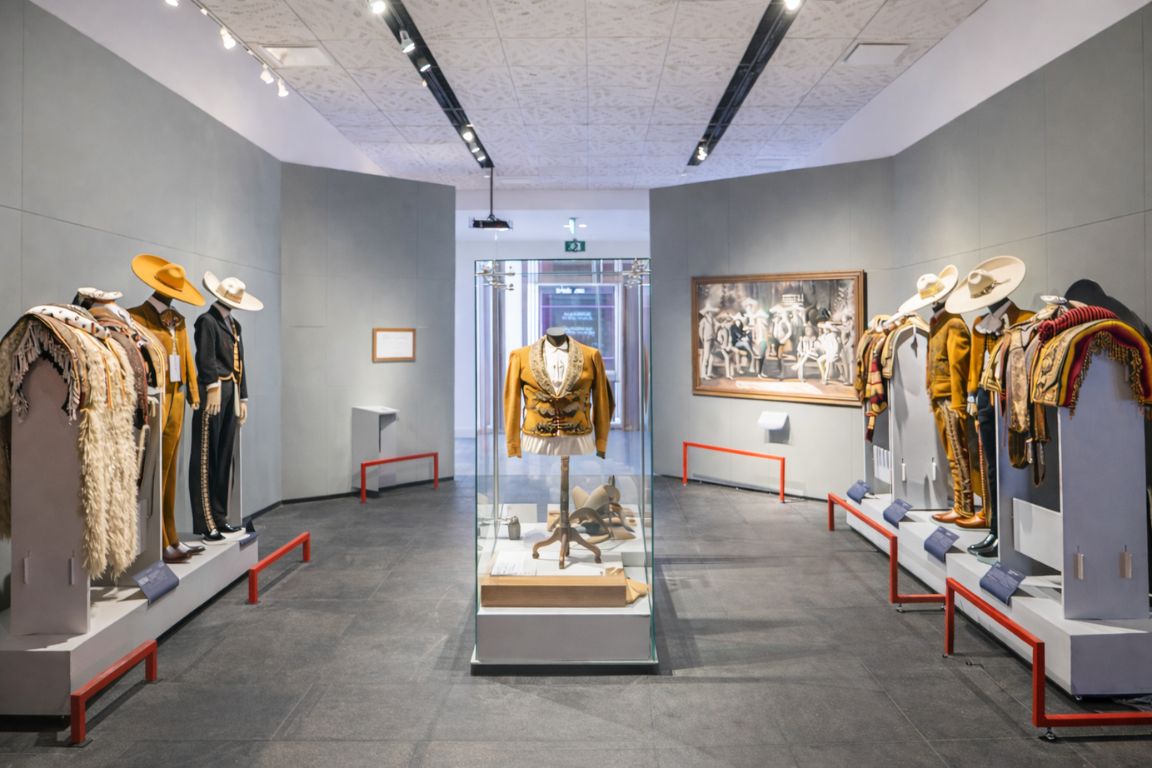 The Jose Cuervo Express runs two itineraries: Amanecer (morning train to Tequila, bus return) and Atardecer (bus to Tequila, evening train return). Both run approximately 11 hours and include the La Rojeña distillery tour, agave field visit with jima demonstration, the Juan Beckmann Gallardo Cultural Center, a folkloric and mariachi show, free time in Tequila, and onboard cocktails and tastings. Wagon classes range from Express to Elite, with tastings and cellar access improving at higher tiers. All adult-only wagons above Express require guests to be 18+.
The day structure differs depending on which itinerary you choose. Amanecer riders board the train at 9 am in Guadalajara, ride through the agave landscape for about two hours with tastings and cocktails onboard, arrive in Tequila late morning, tour La Rojeña, have free time for lunch, watch the folkloric show, visit the agave fields in the afternoon, then bus back to Guadalajara. The Atardecer does the same day in reverse: bus to Tequila in the morning, full day of activities, then the evening train ride home through the golden-hour agave fields. Most experienced travelers prefer Atardecer specifically because drinking on a moving train feels better at sunset than at 9 am, and the lighting is more memorable.
Here’s how the wagon classes break down:
| Express | MX$3,250 adult (~USD $160) | All ages | Cocktails, Tradicional® tasting, La Rojeña tour |
| Premium Plus | MX$3,670 (~USD $185) | 18+ | 3-tequila guided tasting, refined seating, exclusive La Rojeña tour |
| Diamond | MX$4,440 (~USD $225) | 18+ | Reserva de la Familia® bar, private cava access, premium snacks |
| Elite | MX$5,775 (~USD $290) | 18+ | Sensorial 3-glass tasting, cava access, top-tier service |
Prices per Mundo Cuervo 2025 official brochure. Verified April 2026. Youth (6-17) pricing available for Express wagon only.
One practical note: the Diamond and Elite wagons consistently earn more enthusiastic reviews than Express, specifically for the Reserva de la Familia tastings and the cava access that standard wagon passengers don’t receive. If you’re going, the upgrade is worth considering. The gap in price is modest relative to the total day cost, and the tequilas in the upper tiers are genuinely different from what the lower wagons serve.
Also worth knowing: lunch is not included in any wagon. You have roughly 90 minutes of free time in Tequila to find food on your own. Budget for this before the day starts.
We’ve put together a full rundown in our what to expect on a Guadalajara Tequila tour guide so you know exactly how the day unfolds from pickup to drop-off.
How Much Does The Tequila Train Cost Compared To A Regular Tour?
 The Jose Cuervo Express starts at MX$3,250 per person (approximately USD $160) for the Express wagon and reaches MX$5,775 (~USD $290) for Elite. A regular guided group tour runs USD $60-130 per person. A private guided tour runs USD $120–200+ per person. When you factor in that the train doesn’t include lunch and only visits one brand, the total cost of a train day often exceeds what a private tour costs, for fewer distilleries visited.
The cost comparison gets more complex when you account for what’s actually in the price. The train ticket covers the train ride, onboard cocktails, the La Rojeña tour, agave field visit, and the cultural show. What it doesn’t cover: lunch (budget MXN$200-400 depending on where you eat in town), any tequila you purchase at the gift shop, and transport to the departure point from your hotel (Uber or taxi to the train station, or to the Atardecer bus departure location).
A regular guided tour typically includes transport from your hotel door, distillery entries, tastings, agave field access, and a bilingual guide for the full day. Lunch varies by operator. Cantarito stop on the return is often included or optionally added.
| Base ticket/tour price | ~USD $185 per person | ~USD $150-175 per person |
| Hotel pickup | Not included (Uber/taxi ~MXN$200) | Included |
| Lunch | Not included (~USD $10–20) | Varies; often extra |
| Number of distilleries | 1 (La Rojeña) | 2-3 |
| Craft distillery access | No | Yes |
| Train ride through agave fields | Yes | No |
| Live entertainment | Mariachi + folkloric show | Not included |
| Estimated total cost per person | ~USD $200-220 | ~USD $160-190 |
All estimates verified April 2026. Exchange rate fluctuations apply.
The honest answer is that the train costs more per distillery visited, but the cost includes things a regular tour doesn’t deliver: specifically the train atmosphere, the entertainment, and the Cuervo brand experience. If those things matter to you, the train is worth its price. If your priority is tequila depth and distillery variety, a regular tour gives you more for comparable or lower cost.
We’ve put together a full breakdown in our private Guadalajara Tequila tours guide so you know exactly what’s included and whether it fits your budget.
What Do You Miss On The Train That A Regular Tour Covers?
On the train, you see one distillery: La Rojeña. You miss Fortaleza, Cascahuín, Casa Sauza, El Tequileño, Casa Herradura, and every craft producer that makes the Tequila Valley worth studying seriously. You also miss the agave field visit with a bilingual guide who can explain production context across multiple distilleries, and the ability to compare expressions from different producers side by side in the same day.
La Rojeña is a genuinely impressive place. Latin America’s oldest active distillery, operating since 1795, producing a third of global tequila supply. The scale is staggering. The Juan Beckmann Gallardo Cultural Center adjacent to it is one of the finest collections of charro artifacts and tequila history in Mexico. None of this is diminished by the fact that it’s a commercial operation built for tourism.
What the train day doesn’t deliver is contrast. The entire experience is filtered through the Cuervo brand lens. The tastings are Jose Cuervo expressions. The guide’s context is La Rojeña history. The gift shop sells Cuervo products. For someone who wants an introduction to tequila and a memorable day, this is fine. For someone who wants to understand what makes Fortaleza’s tahona-crushed still-strength blanco taste the way it does, or why Cascahuín’s Tahona expression is different from their standard line, the train doesn’t touch those questions.
The social research is unambiguous on this. The travelers who come back most disappointed from the train day are the ones who expected it to function like a broad tequila education. The travelers who come back most enthusiastic treated it as what it actually is: a beautiful, festive, Cuervo-branded event. That framing mismatch is the single biggest source of the negative reviews the train occasionally receives.
Another thing a regular tour covers that the train doesn’t: the craft distilleries outside Tequila town. Cascahuín in El Arenal, Casa Herradura in Amatitán, both on the road between Guadalajara and Tequila. A regular tour can stop at either or both on the same day. The train’s route doesn’t include either town.
Wondering which distilleries offer behind-the-scenes access versus just a gift shop and a sample? This best tequila distilleries to visit in or near Guadalajara guide covers what most lists leave out.
What Does The Train Offer That A Regular Tour Cannot?
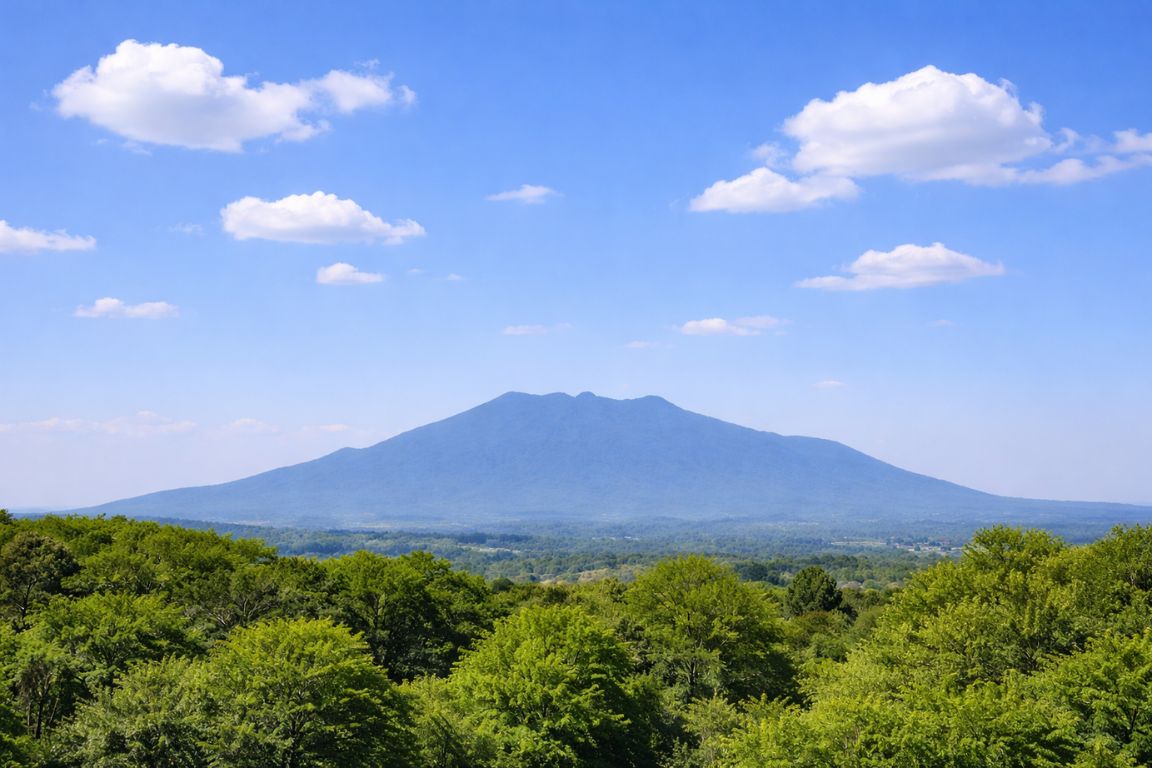 The train offers three things no regular tour can replicate: the scenic ride through the UNESCO agave landscape in a vintage railway carriage, the live entertainment package including mariachi and folkloric ballet inside the Cuervo complex, and the open-bar social atmosphere of riding with fellow travelers through Jalisco countryside. These are atmospheric and experiential, not educational. They create memories of a different kind.
The train ride itself deserves its own paragraph. Leaving Guadalajara, the urban sprawl gives way to the agave landscape within about 20 minutes. The blue agave fields stretch in every direction, geometric and waxy, the plants the same size and the same blue-gray color for what feels like the whole state. The Tequila Volcano sits in the distance. The train moves at an unhurried pace. People have cocktails. Someone near the back of the wagon is already singing along to the music. There is genuinely no equivalent to this on a van tour, and that’s not a criticism of van tours, it’s just a different register entirely.
The folkloric show at Mundo Cuervo catches people off guard in a good way. Most travelers expect something perfunctory, a 15-minute performance staged for tourists. What they find is a genuine production: dancers doing knife work and high kicks that are technically impressive regardless of context, followed by a mariachi set where the Mexican audience members know every word of every song and are entirely unselfconscious about singing along. If you’ve never been in a room where 200 people are genuinely emotionally engaged with mariachi music, this is worth experiencing on its own terms.
The social dimension also differs. A train car creates a shared experience with fellow passengers in a way a van doesn’t. You’re sitting across from strangers at a table in a vintage railway carriage passing through Mexico’s most famous agave landscape, with tequila in everyone’s hand. The social energy of the day is festive in a way a regular tour is not designed to be. Some people find this the best part. Others find it exhausting. Know which one you are before you book.
Which Option Gives You A Better Tequila Education?
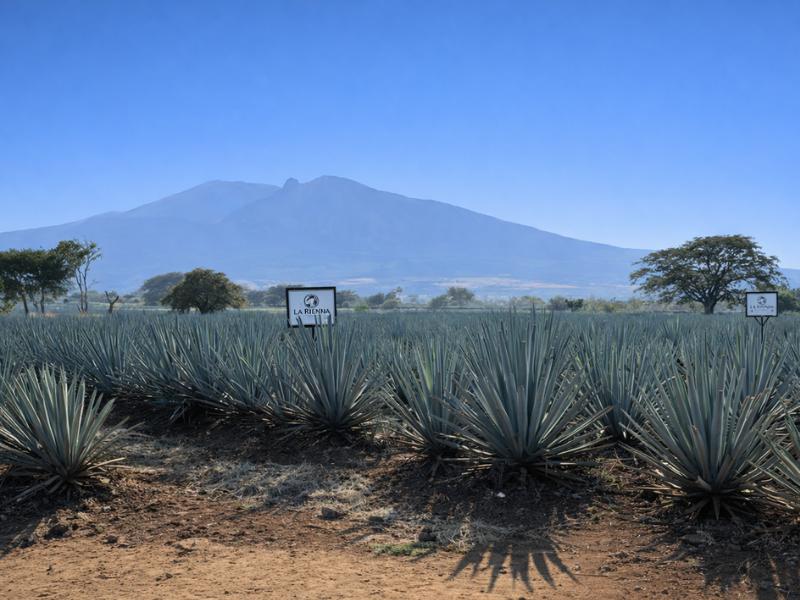
A regular guided tour delivers more tequila education per hour. A bilingual guide covers production across multiple distilleries, the difference between valley and highland agave, the role of the tahona versus diffuser extraction, what additive-free means and why it matters, and the specific characteristics of each producer’s style. The train covers one brand’s story well. For anyone whose goal is understanding tequila rather than celebrating it, the regular tour is the clear choice.
This is the sharpest contrast between the two formats, and it matters most to a specific type of traveler.
On the train, you receive structured tastings of Jose Cuervo expressions (varying by wagon class), a guided distillery tour of La Rojeña, and context about the Cuervo family history and production at industrial scale. The tastings are led by Cuervo staff, who are knowledgeable about their own products and well-trained for this format. What you won’t get is a discussion of why another distillery’s fermentation tanks produce a different flavor profile, because there’s no comparative reference point.
On a regular guided tour with a serious bilingual guide, the education happens through comparison. You taste a Cascahuín Tahona Blanco alongside a standard blanco from the same producer and the guide explains what the tahona does to the extraction. You taste a Fortaleza still-strength directly from the copper pot and understand what the final 40% bottle loses in dilution. If you visit two distilleries with different production philosophies in the same day, the contrast teaches you more about tequila in five minutes of side-by-side tasting than a year of reading does.
The train is better for tasting Jose Cuervo’s range under good conditions. A regular tour is better for understanding tequila as a category. If you could only do one and you’re serious about learning, the regular tour wins. If you’re in Jalisco for a celebration and want an experience rather than an education, the train wins.
We’ve been guiding groups through both formats since 2011. The people who come back most knowledgeable about tequila consistently did a guided tour with stops at multiple distilleries. The people who come back with the most vivid memories of the day frequently took the train. The goals are genuinely different. Our team can help you figure out which one fits what you're actually after.
Who Should Book The Train And Who Should Skip It?
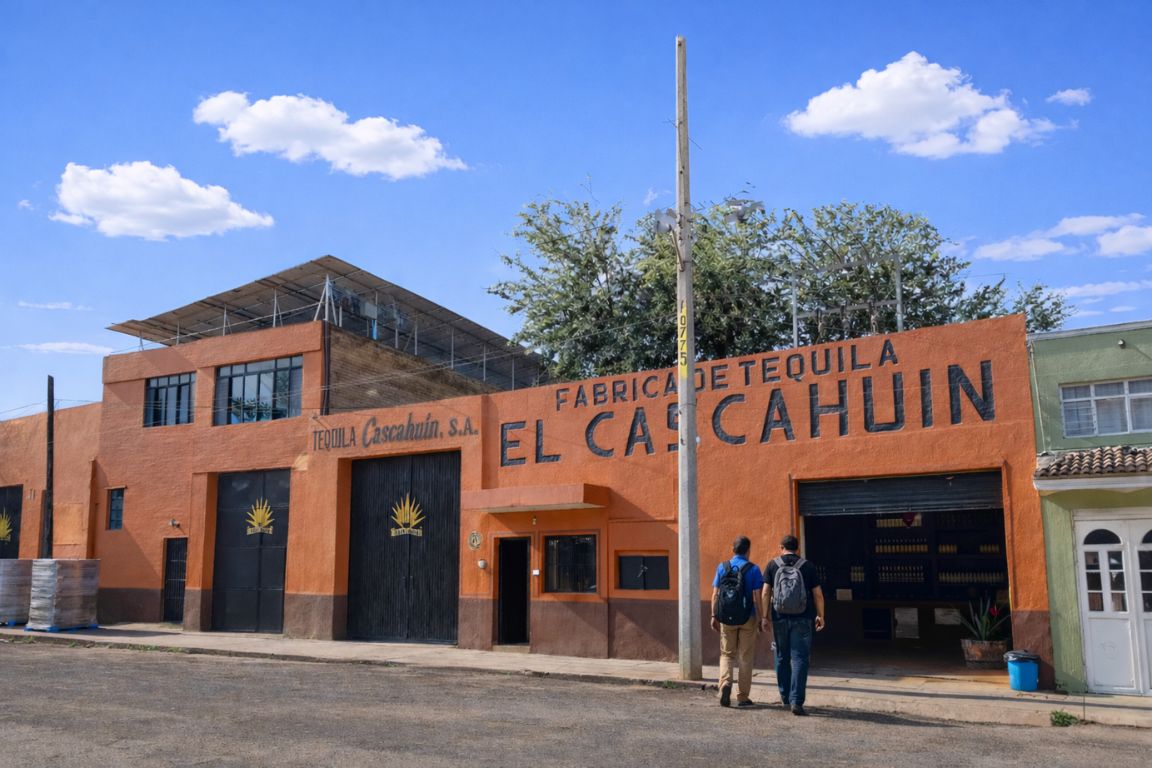 Book the train if you’re celebrating something, if the scenic ride and live entertainment sound genuinely appealing, if you’re a first-timer who wants a produced experience rather than an intensive education, or if you’re traveling with someone who doesn’t drink and wants more than just distillery tours. Skip the train if your primary interest is craft tequila and artisanal producers, if you’re visiting on a day that isn’t Saturday, or if you want the flexibility to choose your own distilleries.
The train is specifically right for:
Couples celebrating something. Honeymoons, anniversaries, birthdays. The train has the production values to make a day feel like an occasion. Diamond or Elite wagon especially. The private booth seating in the higher wagons creates a genuinely romantic setting, and arriving in Tequila by vintage train with tequila in hand is a harder moment to replicate elsewhere.
First-timers who want spectacle alongside substance. If you’ve never been to Jalisco and want the full theatrical experience of tequila country, the train delivers it. The agave landscape, the historic distillery, the show, the town. It’s a complete introduction that requires no planning on your part.
Groups who want a shared festive day. Bachelor parties, corporate groups, friend groups celebrating. The open bar and communal energy of the train suits celebration groups in a way that a structured educational distillery tour does not.
The train is the wrong choice for:
Serious tequila enthusiasts. The train visits one brand. If you’ve come to Jalisco to understand the difference between valley and highland agave, to visit Fortaleza or Cascahuín, or to taste expressions you can’t find internationally, the train day doesn’t serve those goals.
People traveling on any day other than Saturday. The train only runs Saturdays. A Tuesday in Guadalajara is a regular tour day by default, and that’s often a good thing. Fortaleza on a Tuesday morning has a fraction of the crowd that Saturday brings.
Anyone whose budget is tight. At MXN$3,250+ per person before lunch and transport to the departure point, the train is the most expensive way to spend a day in tequila country per distillery visited. A well-run group tour covers more ground for less.
| Celebrating couple | Train (Diamond or Elite) | Atmosphere and occasion energy |
| First-time Jalisco visitor | Either; train for spectacle, regular tour for depth | Depends on whether you want experience or education |
| Tequila enthusiast | Regular tour (private) | Craft distilleries, multiple producers, real comparison |
| Celebration group / bachelorette | Train | Open bar, festive energy, shared experience |
| Budget-focused visitor | Regular group tour | More distilleries for lower cost |
| Traveler on a non-Saturday | Regular tour (only option) | Train runs Saturdays only |
| Family with children | Train (Express wagon, family-friendly) | Kids welcome in Express; regular tours also work |
| Return visitor who did the train last time | Regular tour | Different distilleries, deeper education |
How Do You Book Either Option Through Guadalajara Tequila Tours?
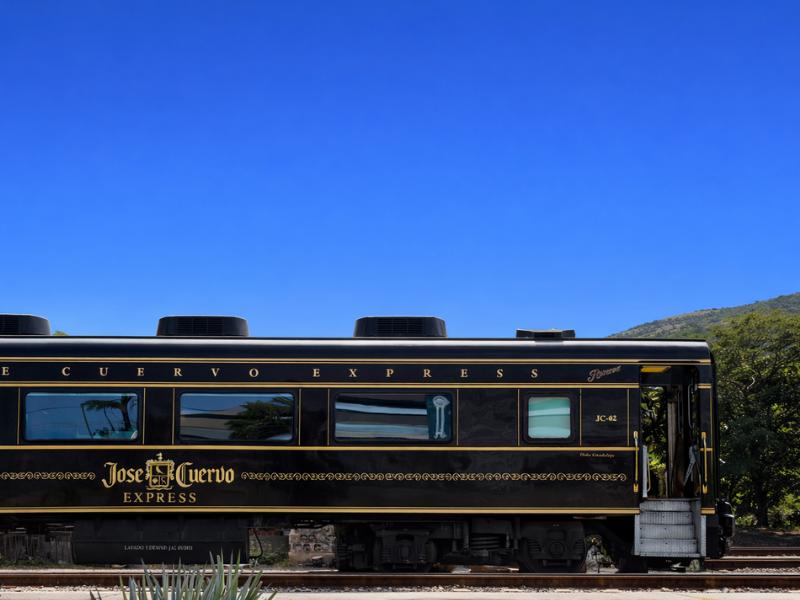
Guadalajara Tequila Tours handles both the Jose Cuervo Express train and regular guided tours. For the train, we coordinate private hotel pickup, check-in assistance, wagon selection, and an optional cantarito stop at El Güero on the return. For regular tours, we build the day around your distillery interests, handle all reservations, and provide a bilingual guide from pickup to drop-off. Train dates sell out weeks in advance during peak season; regular tours can often be confirmed with 48-72 hours notice.
One thing we offer that booking the train directly doesn’t include: private transport from your Guadalajara hotel to the departure point, and an optional private return with a cantarito stop at El Güero after the train day ends. This matters because the train’s standard return is by bus, which means a 90-minute bus ride after an 11-hour day. The private return option, coordinated through our network of authorized driver-guides, puts you back at your hotel with a stop at the best cantarito bar on the Tequila route as the day's final act.
For regular tours, the booking process is the same as we’ve described in other guides: a brief conversation about your group’s interests and dates, distillery selection, confirmation of inclusions, and we handle the rest. Group tours run most days of the week with available spots. Private tours are built around your specific group with 48-72 hours notice minimum.
Some travelers ask whether they can combine both in a single Guadalajara visit. Yes. The train on Saturday, a regular distillery tour on a weekday. We've run that combination for guests who specifically wanted the train atmosphere and also wanted to visit Fortaleza or Cascahuín. Two days, two completely different experiences. Both worth having if you have the time.
If you're still deciding between the formats, tell us what you're celebrating or what you're hoping to learn, and we'll give you an honest recommendation based on what actually fits your goals on a private tequila tour or the Jose Cuervo Express.
Wondering which option gives you more flexibility without sacrificing the best distillery access? This Guadalajara Tequila tours vs DIY visit guide covers what most people only figure out after they’ve already chosen.
Start planning your Guadalajara tequila experience here. Train, regular tour, or both, we handle the logistics.
What Our 8,200 Travelers Tell Us About The Train Vs. Regular Tour
After guiding thousands of groups through both formats, the feedback patterns are consistent:
| % of train guests who say the train ride was the highlight | 88% |
| % of regular tour guests who say the agave field visit was the highlight | 94% |
| Most common train wagon booked by our guests | Premium Plus (45%) |
| % who do both formats on the same Guadalajara trip | 12% |
| Most cited reason for choosing train over regular tour | Special Occasions |
| Most cited reason for choosing regular tour over train | Craft Distillery Access |
| Preferred train itinerary (Amanecer vs. Atardecer) | Atardecer (Sunset) |
Frequently Asked Questions
Does the Tequila train run every day?
No. The Jose Cuervo Express runs Saturdays only, with two itinerary options: Amanecer (morning train to Tequila, bus return) and Atardecer (bus to Tequila, evening train return). During peak season from November through May, Saturday dates sell out weeks in advance. Book as early as possible. If you’re visiting Guadalajara on other days of the week, a regular guided tour is your only option for a structured day trip to Tequila.
Is the Tequila train worth the price?
For the right traveler, yes. Couples celebrating a special occasion, groups who want a festive day with entertainment, and first-time visitors who want the full theatrical experience of tequila country tend to rate the train highly. The honest caveat is that it costs more per distillery visited than a regular tour, covers only one brand, and doesn’t give you the comparative tequila education that visiting multiple producers provides. If your priority is the experience rather than the education, it’s worth it.
Which wagon class should I book on the Jose Cuervo Express?
For most adults, Premium Plus is the sweet spot. It adds a guided three-tequila tasting and refined seating over the Express wagon without the full premium of Diamond or Elite. The Diamond wagon adds Reserva de la Familia tastings and private cava access, which is worth it if you’re already a Cuervo enthusiast or celebrating something significant. Elite is for travelers who want the best version of the experience regardless of cost. Express is the family-friendly option and the only wagon that allows guests under 18.
Can I visit Fortaleza or Cascahuín on the tequila train day?
Not through the standard train itinerary. The train takes you to La Rojeña only. However, if you take the Amanecer itinerary (morning train, bus return), you can arrange a private return with stops at other distilleries if they have afternoon availability. This is one way to combine the train experience with a craft producer visit in a single Saturday. Talk to your tour operator before booking to arrange the logistics.
What’s the difference between Amanecer and Atardecer itineraries on the Cuervo Express?
Amanecer rides the train to Tequila in the morning (9 am departure, tasting onboard, bus return in the evening). Atardecer buses to Tequila in the morning and rides the train home in the evening. Most travelers prefer Atardecer because drinking tequila on a moving train feels better at golden hour than at 9 am, and the sunset lighting on the agave landscape during the return is genuinely beautiful. Amanecer has one advantage: it allows you to add a private return with a cantarito stop, since you’re not constrained by the evening train schedule.
Do I need to book the tequila train in advance?
Yes. During peak season (November through May), Saturday dates on the higher wagon classes sell out one to three weeks in advance. The Express wagon typically has more availability. Book directly at mundocuervo.com for the best prices, as third-party OTA platforms often charge significant markups on the same ticket. If you’re booking through a tour operator, confirm whether the price includes hotel pickup and private return, which improve the overall experience considerably.
Mexican tour guide since 2011 · Founder, Guadalajara Tequila Tours
Mateo has guided over 8,200 travelers through Guadalajara, Tequila town, and the blue agave landscape of Jalisco since founding the agency.